Join CHYK →

The Leaders

Scroll

Swami Tapovan Maharaj
Swami Chinmayananda
Swami Tejomayananda
Swami Swaroopananda
Swami Mitrananda
Swami Swatmananda
Swami Anukoolananda
01 / 07

TAPOVANJI

Swami Tapovan Maharaj

In the Chinmaya family he is remembered as Param Guru, the teacher of our teacher, and his name is spoken softly, the way one might speak of the Himalaya itself. The Mission calls him Himavat Vibhuti, the jewel of the Himalaya. Most of what we know of him comes to us through Pujya Gurudev, who sat at his feet in Uttarkashi, and through the few books he left behind. He asked very little of the world while he lived in it, and those who read about him today often find that he stays with them long after the book is closed.

He was born in Kerala in 1889, in the Palakkad country, into a family of some standing. He was named Subrahmanyan, and at home they called him Chippukutty. His father hoped to give the boy the finest schooling that could be had. The boy found the classroom confining, left it early, and went on learning by himself, and by the time he was a young man he had mastered both Malayalam and Sanskrit. People around him began to speak of him as unusually gifted with language. Before he turned twenty-one he had lost both his parents.

The pull toward renunciation came early. In 1910 he spent some time studying the scriptures under Swami Satyananda in Bhavnagar, in Gujarat, and then went home to Kerala, where the needs of his family held him for more than a decade. In those years he gave public talks on religion and Vedanta, and on the questions of the day as well, and he wrote for newspapers and journals. Inwardly he was already living as a monk. He waited only until his family no longer depended on him.

That day came in 1923, when his brother qualified to practise law. He left home, stayed for a while with Swami Hridayananda near Nashik, and on the banks of the Narmada he put on the ochre robe himself. The next year, in Rishikesh, he received formal sannyasa from Swami Janardana Giri, the head of Kailash Ashram, and took the name by which we know him. That same summer he walked up into the high Himalaya, to Uttarkashi, to Gangotri and on to Kailash, and for the rest of his life he never returned to the plains.

The life he made in the mountains was simple to the point of severity. At Uttarkashi he lived in a small hut of stone and mud by the Ganga, with a blanket and a water pot, and in the summer months he went up to Gangotri. He took one plain meal a day from the Kali Kambli Wala kshetra and is remembered for washing the spices off it before he ate. When no alms came, he went without. He walked barefoot through snow. Each morning began with a bath in the river, and the rest of the day was given to contemplation of the Truth. Seekers found their way to his door over the years, and he accepted only a very few of them as students.

He was a poet of rare feeling. His journeys to Yamunotri, Kedarnath, Badrinath, Amarnath, Gomukh, Kailash and Manasarovar are recorded in Wanderings in the Himalayas, and his autobiography, Ishwara Darshan, written in Sanskrit, carries the clear teaching of Vedanta inside the story of a life. During one chaturmasya he composed a few verses every morning in praise of Lord Kashi Vishwanath of Uttarkashi and read them aloud at the temple after his bath. Those verses became the Soumya Kashisha Stotram, which holds devotion and the essence of sixteen Upanishads together in one hymn. He wrote hymns to the Ganga, to Badrinath and to Gangotri too, and reading them one feels how completely the mountains and the rivers had become, for him, a form of the Lord.

In 1949 a young sannyasi named Swami Chinmayananda came to Uttarkashi, sent by his guru, Swami Sivananda, to study with the master of the mountains. He lived for the next few years in a cowshed with a stone for his pillow and studied the Bhagavad Gita, the Upanishads and the Brahma Sutras at Tapovanji's feet. When he went down to the plains in 1951 to share what he had learned, he carried his teacher's blessing with him. Gurudev later described his guru as a God without a temple and a Veda without language, and there is little any of us could add to that.

Swami Tapovan Maharaj left his body in the early hours of 16 January 1957, on Pausha Purnima, and the Mission remembers him on that day every year. His kutia still stands by the Ganga at Uttarkashi, and seekers still go there to sit for a while where he sat. He founded no institution of his own. Every Bala Vihar class, every study group and every CHYK meeting in the world can still trace itself back to that small hut by the river and to the man who lived in it.
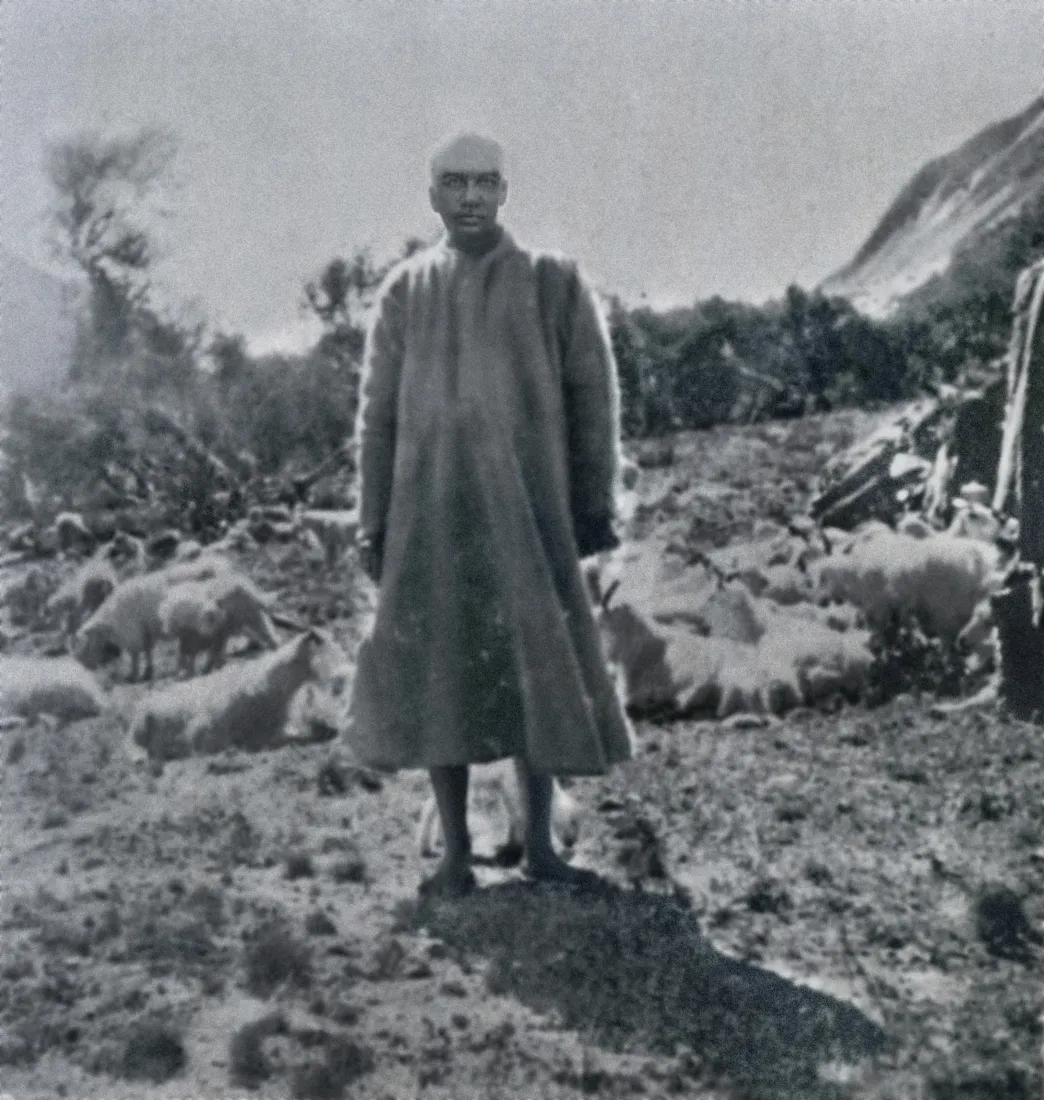
Swami Tapovan Maharaj standing on a Himalayan slope among grazing sheep
In the high Himalaya, where he spent his life.
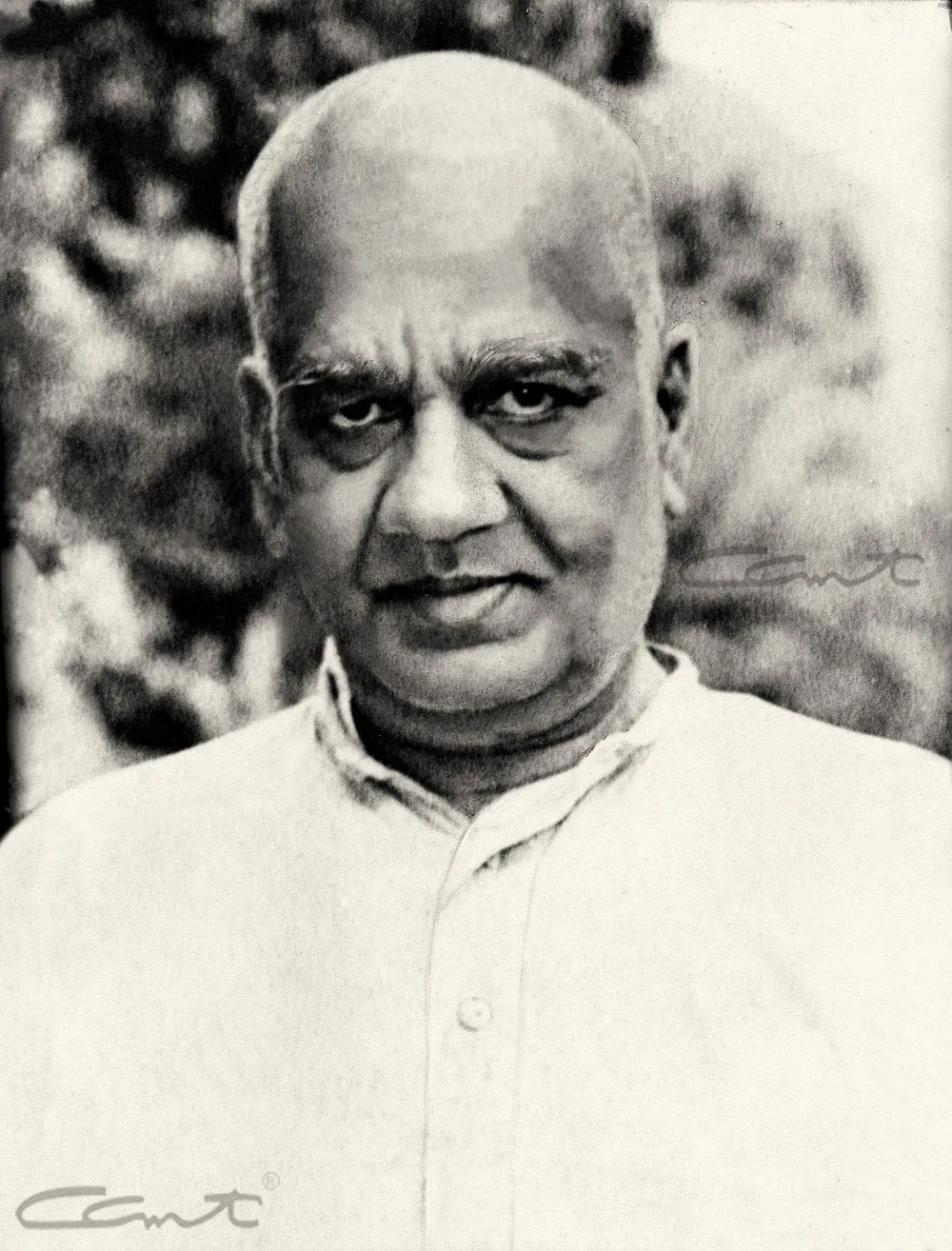
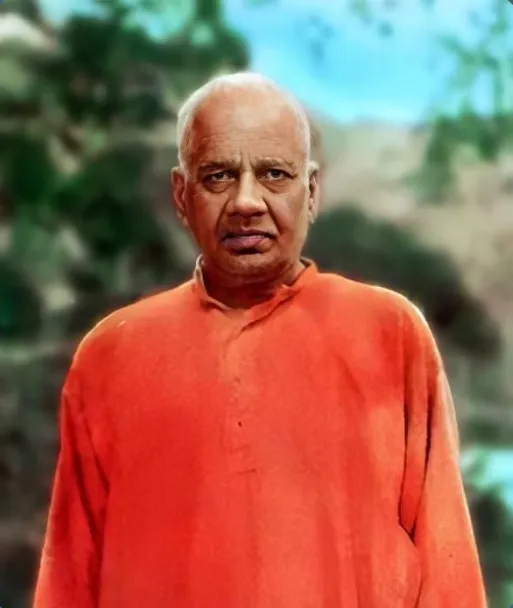
Swami Tapovan Maharaj in an ochre robe
Swami Tapovan Maharaj.
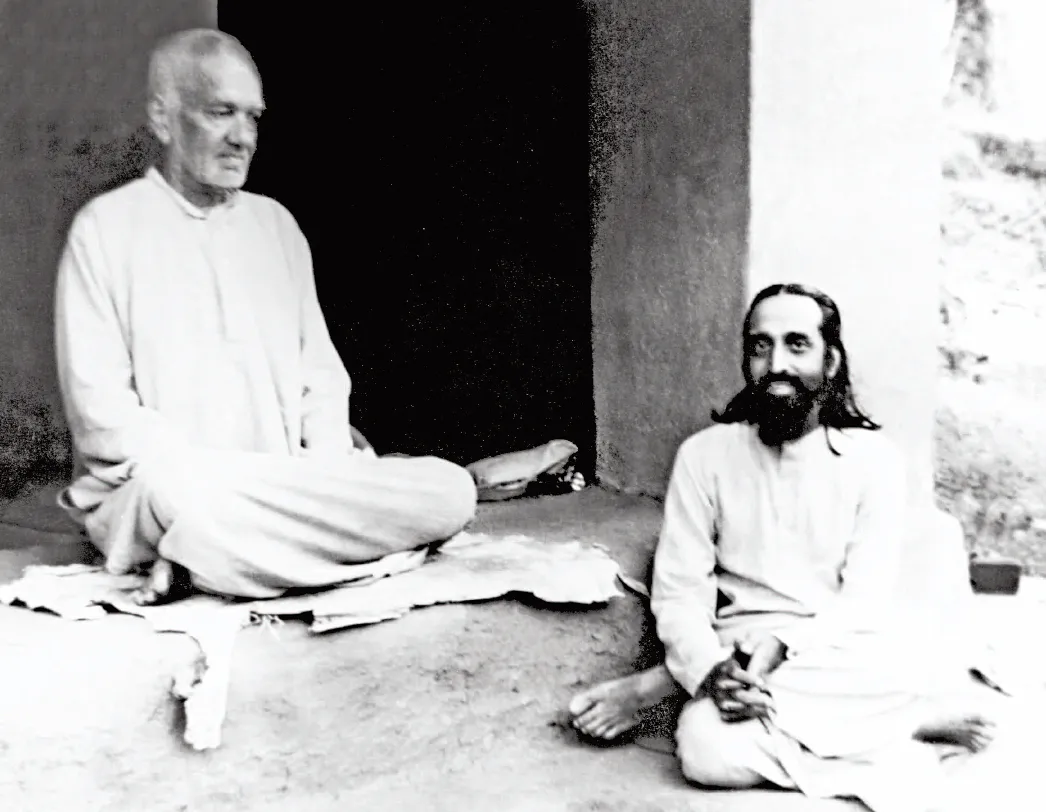
Swami Tapovan Maharaj and Swami Chinmayananda seated outside at Uttarkashi
With Swami Chinmayananda at Uttarkashi, 1956.

GURUDEV

Swami Chinmayananda

To most of us he is simply Gurudev. He took the Upanishads and the Bhagavad Gita out of the monasteries and the Sanskrit schools and set them before ordinary men and women, in English, in town halls and tents and temple courtyards, and then asked them to live by what they had heard. Chinmaya Mission, Chinmaya Yuva Kendra and everything on this website begin with him.

He was born Balakrishna Menon on 8 May 1916 in Ernakulam, Kerala, into a respected family; his father was a judge. His mother passed away while he was still a small boy. He went to school in Kochi and Thrissur, took his degree at St. Thomas College in Thrissur, and then went north to Lucknow University, where he studied English literature and law and took courses in journalism as well. He was bright and restless and sceptical, as so many young men of that generation were, and he had little patience with religion as he saw it practised around him.

The freedom struggle drew him in. During the Quit India movement of 1942 he helped write and distribute leaflets against British rule, and when a warrant was issued for his arrest he spent about a year underground. He was later arrested and imprisoned, and he came out of prison gravely ill. Afterwards he worked as a journalist with The National Herald, writing about history and culture and social questions, and about the quiet dignity of working people, the postman and the cobbler among them.

In 1947 he travelled to Swami Sivananda's ashram in Rishikesh. By his own account he went to collect material for an article exposing the holy men of the Himalaya. He stayed on, and the questions he had carried up the mountain slowly turned into a search of his own. On Mahashivaratri, 25 February 1949, Swami Sivananda gave him sannyasa and the name Swami Chinmayananda, the bliss of pure Consciousness.

Swami Sivananda then sent him higher into the mountains, to Swami Tapovan Maharaj at Uttarkashi. Under that great and austere teacher he lived in the simplest way, sleeping in a cowshed with a stone for his pillow, and studied the Gita, the Upanishads and the Brahma Sutras. Over those years a resolve formed in him to take this knowledge back to the people of India, who had inherited it and had largely forgotten it. In May 1951 he came down from the Himalaya with his teacher's blessing.

His first Gita Jnana Yajna began in December 1951 at a Ganesha temple in Pune, and only a handful of people came to hear him on the first evening. He kept speaking, and within a few years the audiences had grown into thousands. In 1953, when devotees in Madras asked him for a way to keep studying between his visits, Chinmaya Mission was formed. He had told them plainly that he did not want any organisation in his name. They persisted, and he agreed. Over forty years of travel he gave more than five hundred series of these yajnas in India and around the world, and he wrote ninety-five books, among them commentaries on the major Upanishads and The Holy Geeta.

He thought constantly about who would carry the work forward. He founded Sandeepany Sadhanalaya in Mumbai, where young men and women study Vedanta in residence and go out as teachers. He began Bala Vihar for children, study groups for adults and Devi groups for women. In May 1975 a youth camp in Bangalore left some sixty young people between seventeen and twenty-five wanting more, and from them Chinmaya Yuva Kendra was born, with his vision of young people discovering the strength already within them. In the same decades came the Chinmaya schools and hospitals, the Chinmaya Organisation for Rural Development, and the Chinmaya International Foundation for Sanskrit research, at Veliyanad in Kerala, the ancestral home of Adi Shankaracharya.

Those who knew him speak of his humour as often as of his fire, and of how directly he spoke to whoever was in front of him, whether it was a hall of thousands or a single child. He once said that the tragedy of human history is that there is decreasing happiness in the midst of increasing comforts, and he spent his whole life offering people the one knowledge he believed could answer that.

Gurudev attained mahasamadhi on 3 August 1993 in San Diego, California. His body was brought home to India and laid to rest at Sidhbari in Himachal Pradesh, in the ashram he loved below the Dhauladhar range, where his samadhi stands today in a rose garden behind his kutia. In 2015, as his birth centenary began, the Government of India released a commemorative coin in his honour. The Mission he left behind now has centres across the world, and it is still, in every way that matters, his.

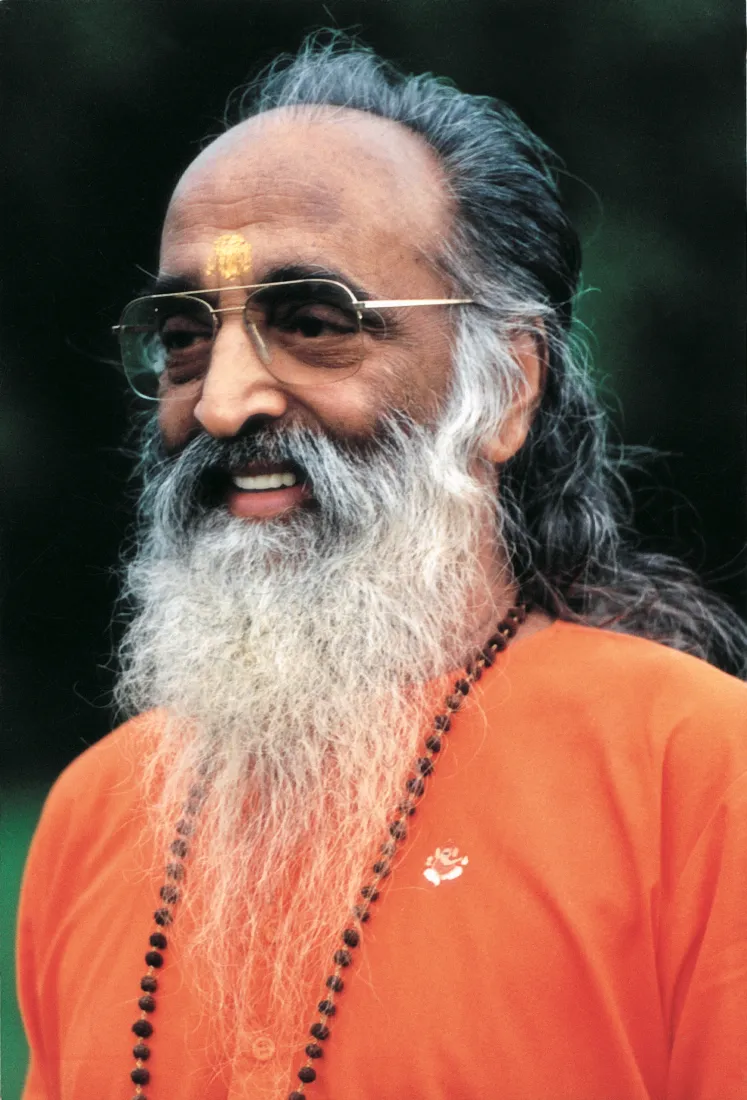
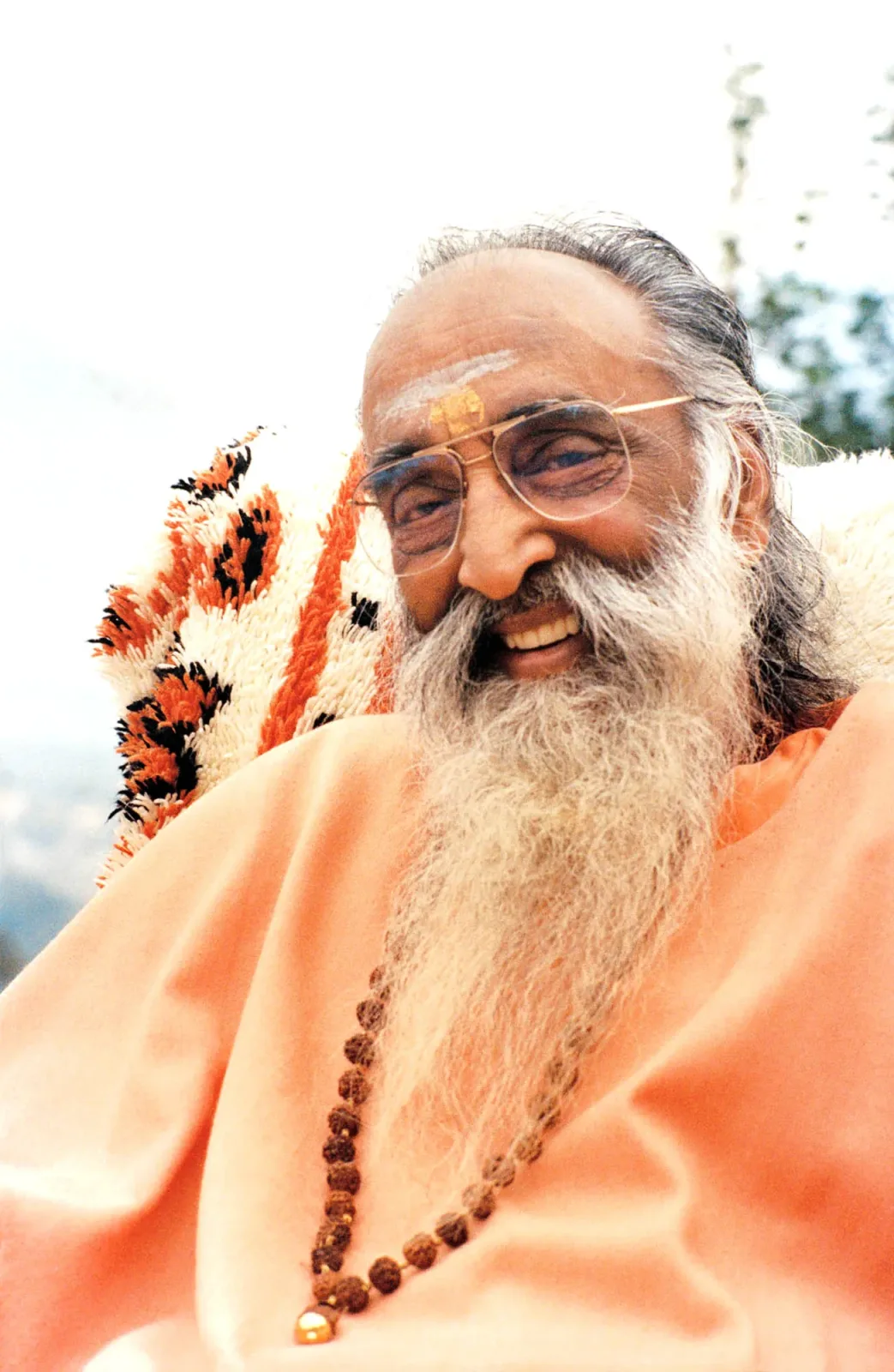
Swami Chinmayananda smiling, in saffron, with a rudraksha mala
Pujya Gurudev Swami Chinmayananda.
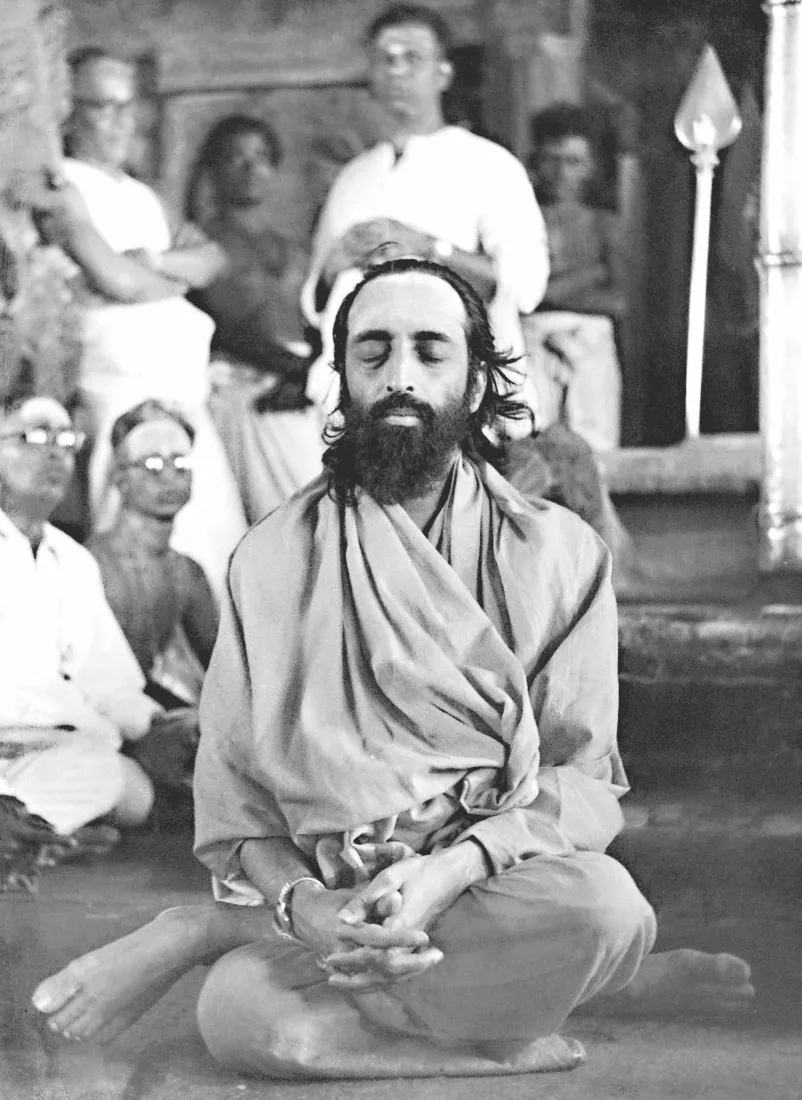
A young Swami Chinmayananda seated cross-legged, black and white
As a young sannyasi.
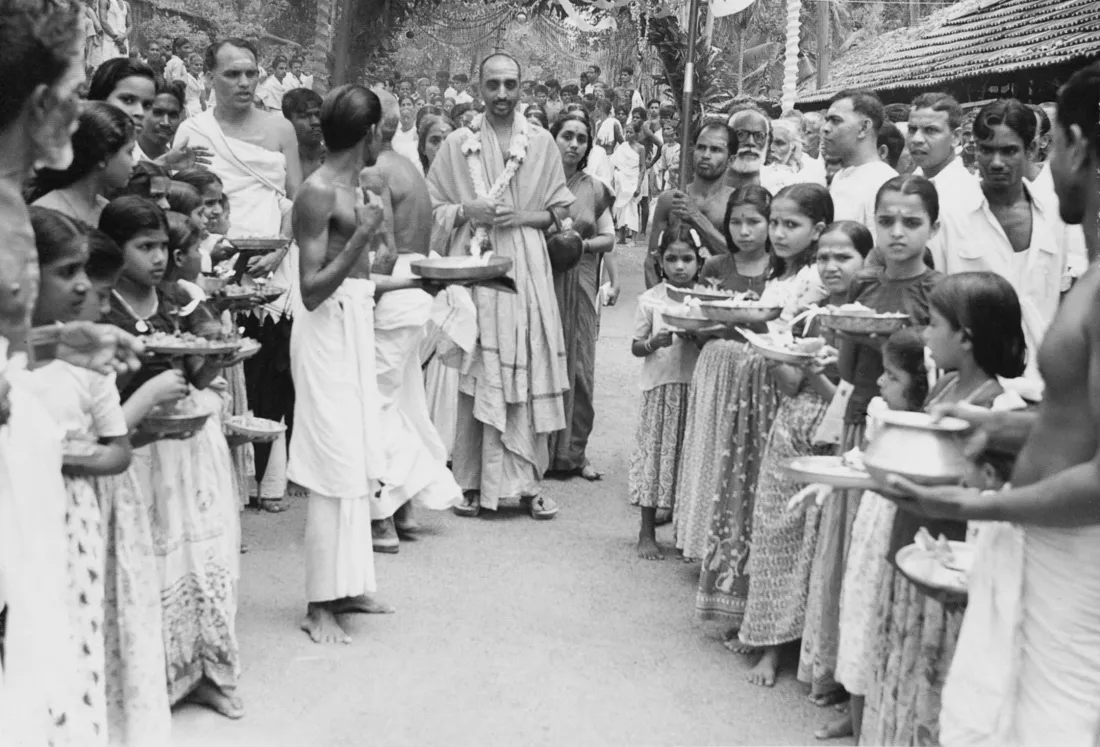
Swami Chinmayananda walking between rows of people holding offerings
Welcomed on his way to a Jnana Yajna.

GURUJI

Swami Tejomayananda

For nearly a quarter of a century after Gurudev left his body, it was Pujya Guruji who held the Chinmaya family together. He did it gently, with music and good humour, and with a depth of learning that he has always worn lightly. Under his care the Mission grew in ways that would surely have gladdened his own teacher.

He was born Sudhakar Kaitwade on 30 June 1950 in Madhya Pradesh. As a young man he was studying physics and was about a year away from completing his master's degree when, in October 1969, he went to hear Swami Chinmayananda speak on the third chapter of the Bhagavad Gita in Indore. The talks stayed with him. A few months later, in February 1970, he left home with his mother's blessings and went to Sandeepany Sadhanalaya in Mumbai.

The next residential course was not due to begin until September 1972, so for more than two years he served in the ashram and waited for it. When it came he studied under Gurudev and Swami Dayananda, and on completing it in 1975 he was initiated as Brahmachari Vivek Chaitanya. He served the Mission in Bhopal and then for four years in Kanpur, and from 1981 to 1983 he taught the Hindi residential Vedanta course at Sandeepany Himalayas in Sidhbari. On 21 October 1983 Gurudev gave him sannyasa and the name Swami Tejomayananda, one whose brilliance is the brilliance of knowledge and compassion.

He went on to teach two complete English residential courses at Sandeepany in Mumbai, from 1984 to 1988. Among his students in those years was the young man who is today Swami Swaroopananda, the Mission's Global Head. From 1989 he served as the acharya of the Mission's centre in San Jose, California.

When Gurudev attained mahasamadhi in August 1993, the care of Chinmaya Mission worldwide came to him. He accepted it with words the Mission still repeats: "I am not in Swamiji's shoes, I am at his feet." In the years that followed he travelled almost without rest, giving jnana yajnas week after week in city after city. He teaches with equal ease in English, Hindi and Marathi, and he is at home in Sanskrit.

Many of the Mission's great institutions took shape in his time. Chinmaya International Residential School in Coimbatore fulfilled a hope that Gurudev had held. He nurtured the Chinmaya International Foundation into a centre for Sanskrit and the Indian knowledge traditions, and he played a central part in founding Chinmaya Vishwa Vidyapeeth. He conceived Chinmaya Vibhooti near Pune, with its gurukula for the performing arts, Chinmaya Naada Bindu, and he gave the Mission Chinmaya Swaranjali, its devotional music ensemble, and the Chinmaya Vision Programme for schools. The television series Upanishad Ganga was made under his guidance. Through Gurudev's birth centenary in 2015 and 2016 he led the whole Mission in celebration, and the film On a Quest carried Gurudev's story to a new generation.

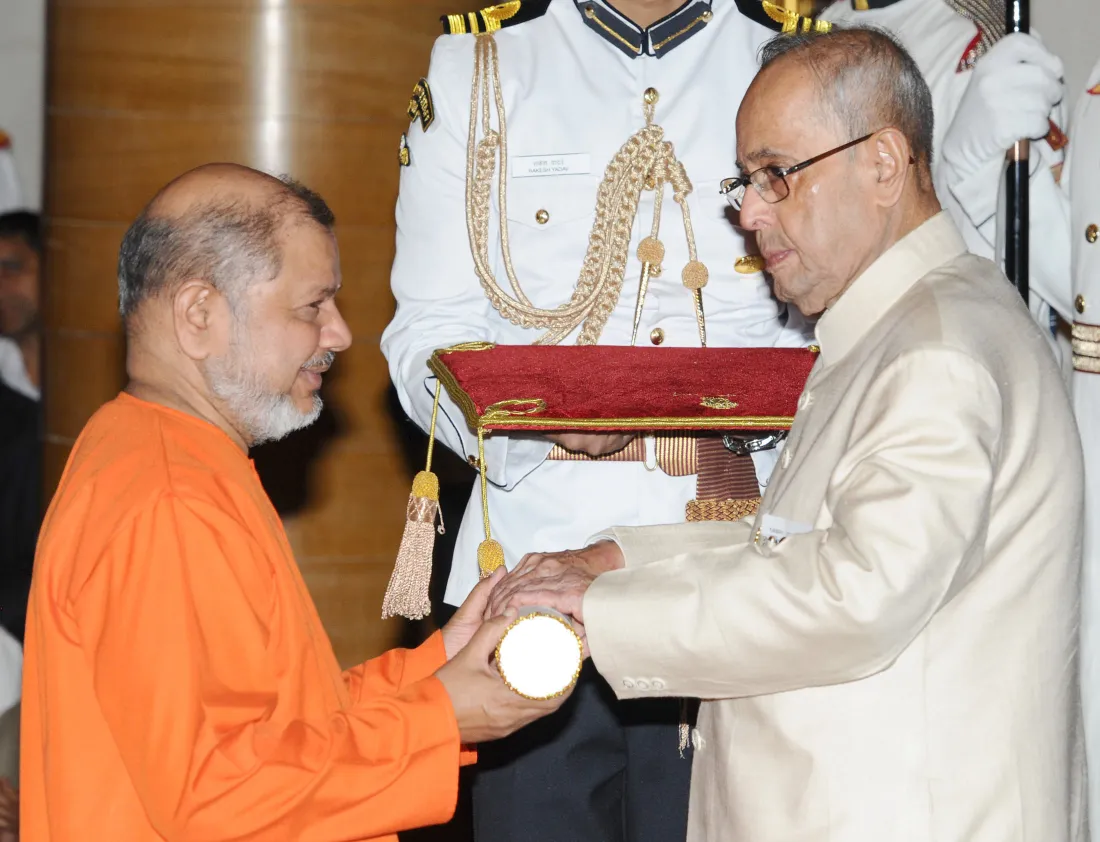
He is a poet, a composer and a singer, and anyone who has heard him sing a bhajan of his own making knows how naturally the teacher and the devotee live together in him. He has written more than fifty books. Among them are commentaries on Tattvabodha, Upadesa Sara and Panchadasi, discourses on the Ramacharitamanasa and the Shrimad Bhagavatam, and gentle original works such as Jivansutrani and Adarsha Jivan. In 2016 the Government of India conferred the Padma Bhushan on him, and the President, Shri Pranab Mukherjee, presented it to him at Rashtrapati Bhavan on 12 April that year.

In January 2017 he handed the leadership of the Mission to Swami Swaroopananda, once his own student. He continues to guide seekers through satsang and bhajan, and for the many of us who first heard the Gita or the Ramayana in his voice, he will always be simply Guruji.

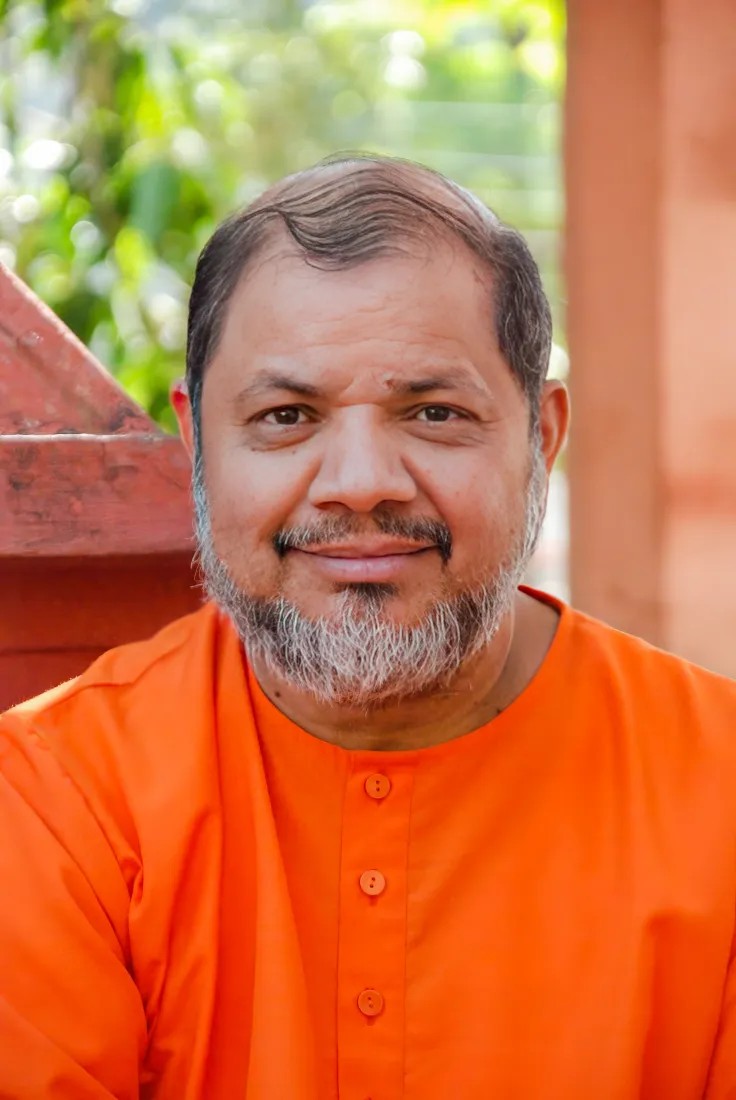
Swami Tejomayananda smiling, in saffron
Pujya Guruji Swami Tejomayananda.
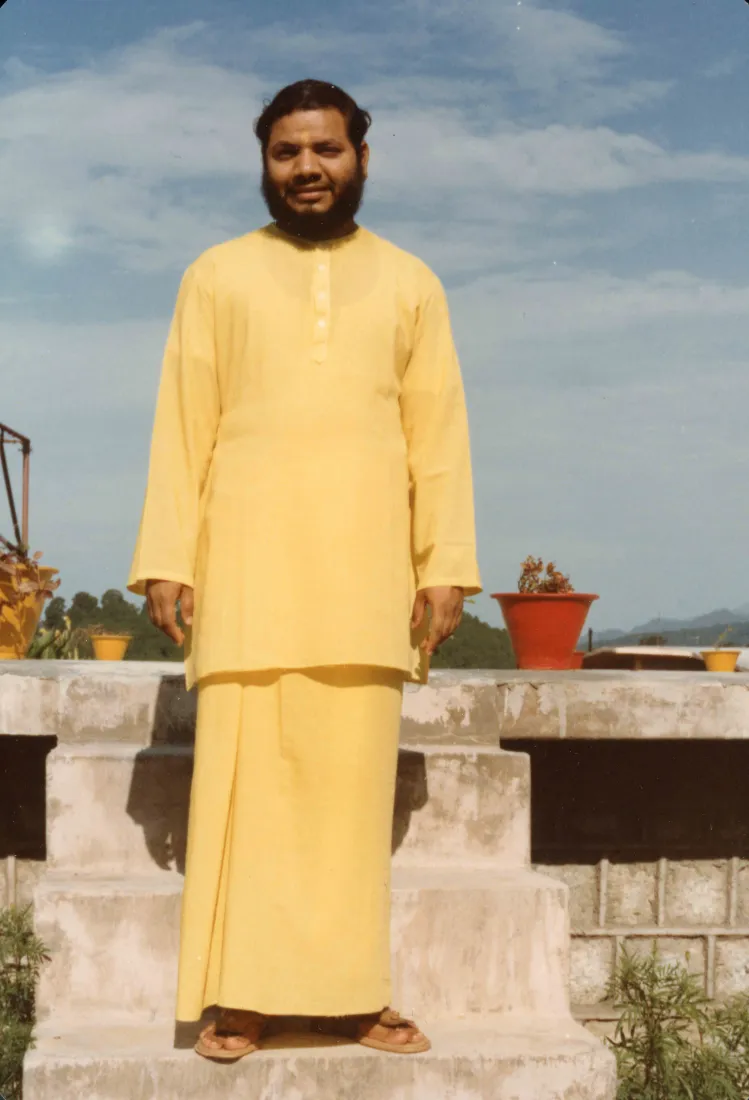
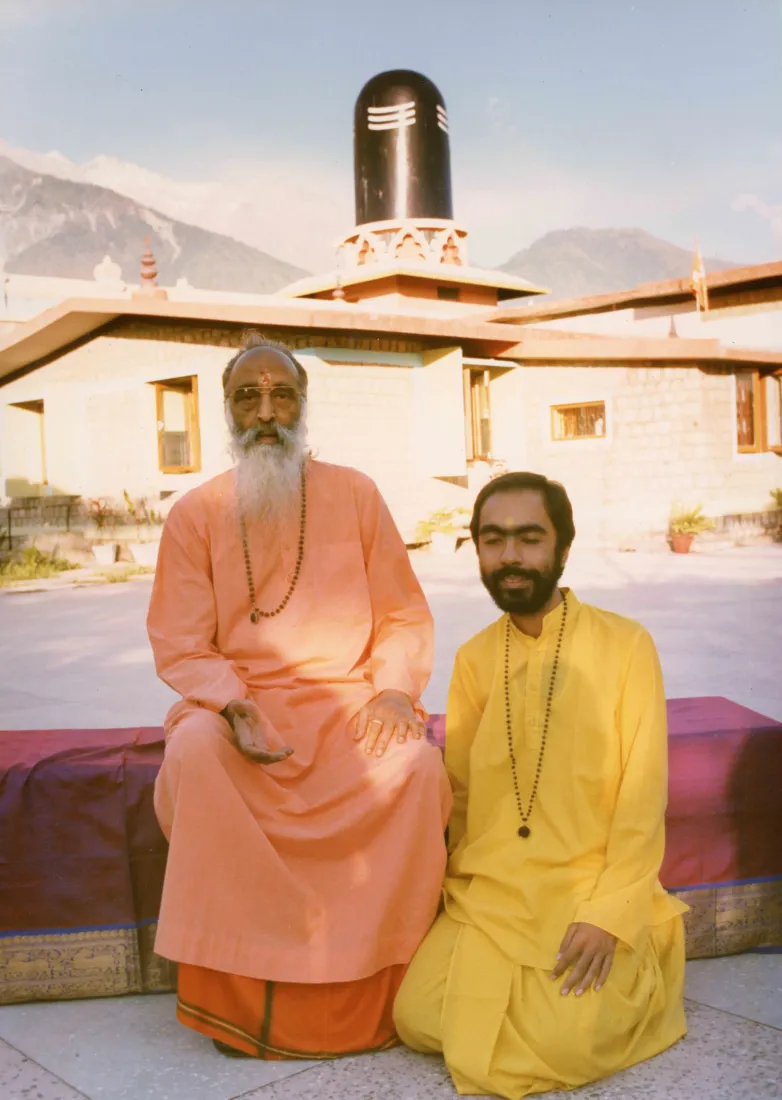
A young Tejomayananda in the yellow robes of a brahmachari, standing on a terrace
In the yellow robes of a brahmachari.
President Pranab Mukherjee presenting the Padma Bhushan to Swami Tejomayananda
Receiving the Padma Bhushan from President Pranab Mukherjee, 12 April 2016.

SWAROOPANANDAJI

Swami Swaroopananda

Swami Swaroopananda has led Chinmaya Mission worldwide since 19 January 2017, the third to carry that responsibility after Pujya Gurudev and Pujya Guruji. More than three hundred and fifty Chinmaya Mission centres around the world look to him. For CHYK the bond is closer still, because for almost two decades the youth of the Mission have gathered around him every year at the Global CHYK Camp.

He was born and brought up in Mumbai, in a lively family with a business of its own. As a child he listened to his grandmother tell the stories of the epics and the lives of the saints, and even then he sensed that there must be something more lasting than the ordinary joys and sorrows of life. As a young man he came upon Swami Chinmayananda and his commentary on the Gita, and those old stories suddenly came alive for him. He was a student then, headed for a life in business and economics, and in 1981 he joined Chinmaya Yuva Kendra.

In 1984 he gave up his place in the family's flourishing business in Hong Kong and joined the residential Vedanta course at Sandeepany Sadhanalaya in Mumbai. He studied there under Gurudev and under Swami Tejomayananda, who was the acharya of his course. In 1992 Gurudev initiated him into sannyasa and gave him the name Swami Swaroopananda.

In 1995 he was sent to the Far East as Regional Head, with Australia as his base. He helped the Mission's centres grow across South East Asia and began the annual family camps there, and in time his care reached the Mission in Australia, the United Kingdom, the Middle East, Africa and the Far East. He spent more than twenty years in that work before he was asked to lead the whole Mission.

Swamiji has an unusual gift for putting the old wisdom into a form that people in the thick of working life can use. He conceived and first conducted Make It Happen, a self-development course that has since been adapted for human resource training in companies in India and abroad, and he has spoken at London Business School, at Harvard University and at the Ford Motor Company. His books include Storm to Perform, Managing the Manager, Simplicity and Meditation, Avatar and Journey into Health. He has also written commentaries on the Maha Mrityunjaya Mantra, on Sankat Mochan, and on Ik Onkar, which comes from a lifelong love for the Sikh Gurus and their sacred writings.

As Global Head he was quick to take the Mission's teaching onto digital platforms. During the pandemic he started Each One Reach One, which brought relief to thousands of people, and he launched The Holy Geeta campaign with free books, discourses and guided meditations for anyone who wanted them. He is the Chancellor of Chinmaya Vishwa Vidyapeeth and chairs the committee that runs Chinmaya International Residential School. Under his guidance the Mission has prepared for the Chinmaya Amrit Mahotsav, its celebration of seventy-five years.

Young people sense that he enjoys their company. He has led the Global CHYK Camp every year since 2007, and he speaks to youth with directness and warmth, in open question and answer sessions as often as in discourses. Those who learn from him describe a teacher who joins logic with heart and theory with practice. For many a CHYK member, sitting in one of his camps and hearing him take an honest question seriously is the moment the Mission begins to feel like home.

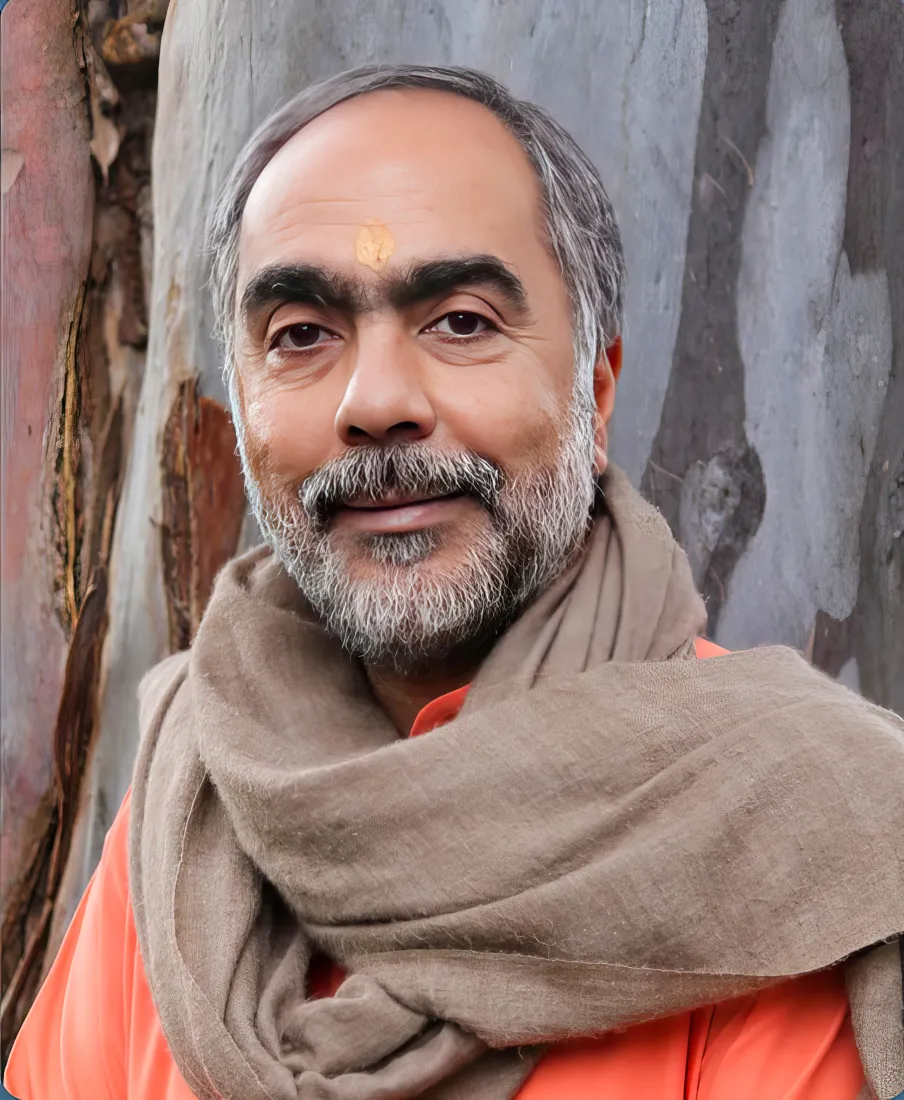
Swami Swaroopananda with a shawl over his shoulders, smiling
Swami Swaroopananda.
A young Swaroopananda in yellow robes seated beside Swami Chinmayananda
As a young brahmachari, with Pujya Gurudev.
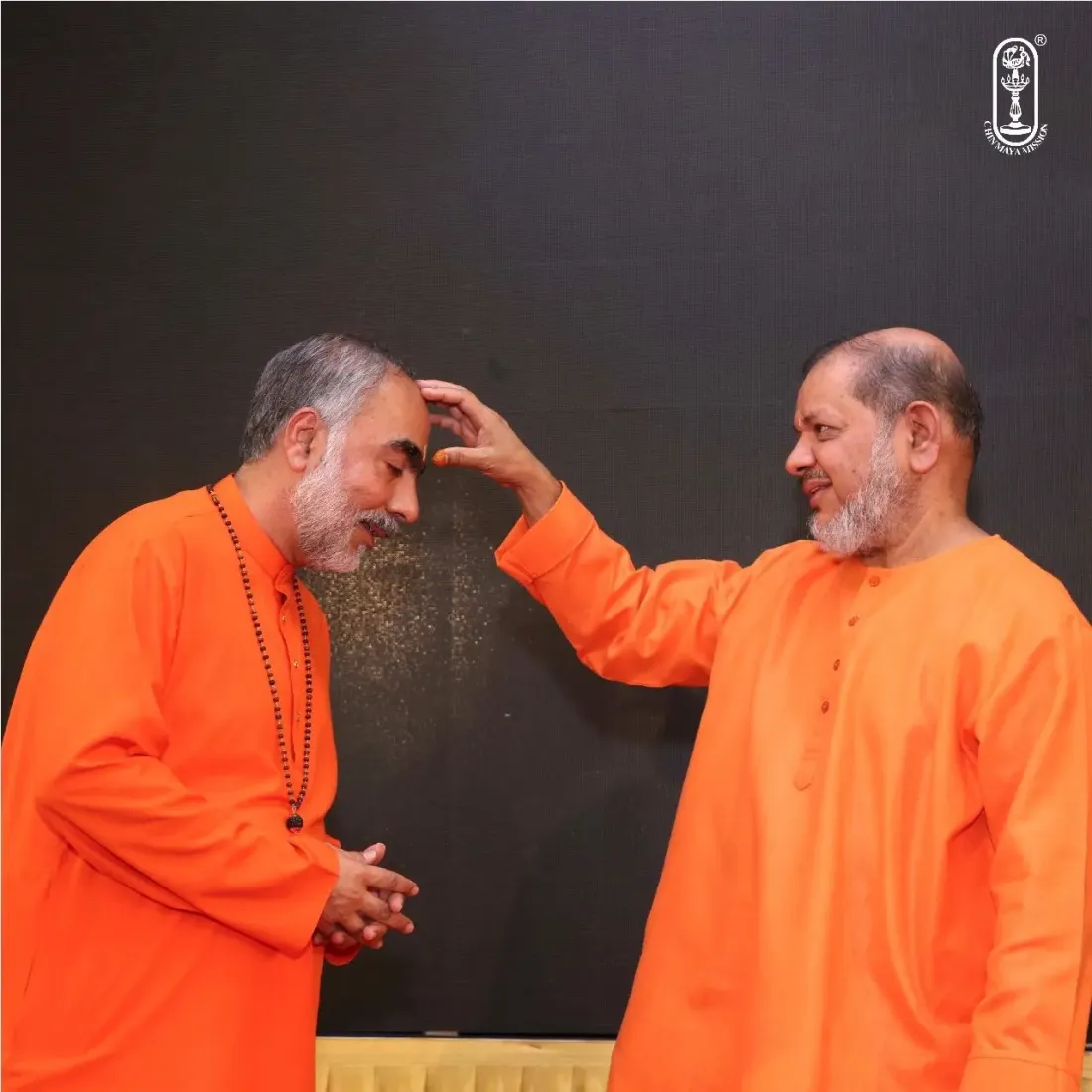
Swami Tejomayananda blessing Swami Swaroopananda
Blessed by Pujya Guruji as the leadership passes to him, 2017.

MITRANANDAJI

Swami Mitrananda

For a great many CHYK members in India, Swami Mitrananda is the youth movement itself. He has spent most of his life among young people, first as one of them and then as their guide, and much of what CHYK does today, the Youth Empowerment Programme among it, began as an idea of his.

He was born into a family rooted in spirituality and grew up under Pujya Gurudev's care from childhood. As a young man in Chennai he was an active member of Chinmaya Yuva Kendra, and he acted in Kamban Tharum Katchi, the first stage production ever put on by Chinmaya Mission Chennai, in Gurudev's own time. He graduated in English literature, and in 1989 he followed his inner calling to Sandeepany Sadhanalaya in Mumbai and its two-year course in Vedanta.

In May 1991 Gurudev initiated him into brahmacharya as Brahmachari Swabodh Chaitanya, and he served in a number of centres in Tamil Nadu. In 1999 Pujya Guruji gave him sannyasa and the name Swami Mitrananda. He is the resident Spiritual Mentor of Chinmaya Mission Chennai. He served for years as National Director of the All India Chinmaya Yuva Kendra and is now its National Advisor, and he is the publisher of Chinmaya Udghosh, the Mission's international youth magazine.

He began the Youth Empowerment Programme in 2003. In his own words, he had found that the youth needed better mentors, people just a few years older than themselves, who could reach a fifteen-year-old in a way a monk often cannot. YEP asks young graduates to give a year of their lives to Bharat. They learn, they serve in Chinmaya centres and schools across the country, and they carry what they have learned for the rest of their lives. Hundreds of Yuva Veers have come through it since, in batches taught in English and in Hindi and Malayalam as well.

Over the years he has guided a long line of ventures for the young. As National Director he led the nationwide quizzes Awakening Indians to India and Transforming Indians to Transform India, which drew participants in lakhs. He set up the Chinmaya Academy of Management and the Chinmaya Academy for Civil Services. In August 2016 he brought the Geeta Mahotsav to the YMCA grounds in Chennai, and it was taken up that December at the first International Geeta Mahotsav in Kurukshetra. Every summer the COOL camp in Chennai, which he mentors, gathers more than five hundred children. His Sandesh Vahinis, buses that travel from town to town, have carried the lives of Gurudev, of Dr A. P. J. Abdul Kalam and of Adi Shankaracharya, and the message of the Gita, to people who might never have come to a hall to hear them. In Gurudev's birth centenary he was closely involved in the writing, casting and making of On a Quest, the film of Gurudev's life.

He writes and stages plays, among them Bharati-yaar?, India 2047, Surya 108 and Campus, and he has written books for young readers, among them Team Work and Drop, a novel written together with the Yuva Veers of the fifth YEP batch. His camps for youth and children are much sought after in Australia, Hong Kong, Singapore, Malaysia, the United Kingdom, the UAE and the United States, and he has represented Hindu thought at many interfaith forums. He serves on the advisory board of the Ekatma Dham project of the Government of Madhya Pradesh, which is devoted to the vision of Adi Shankaracharya, and in 2022 his series Gita for the Millennia took the Bhagavad Gita chapter by chapter.

He teaches in a way that students find easy to follow, often joining the principles of management to those of the spirit. Many CHYK members first found out through him that the Gita had something to say to them personally.

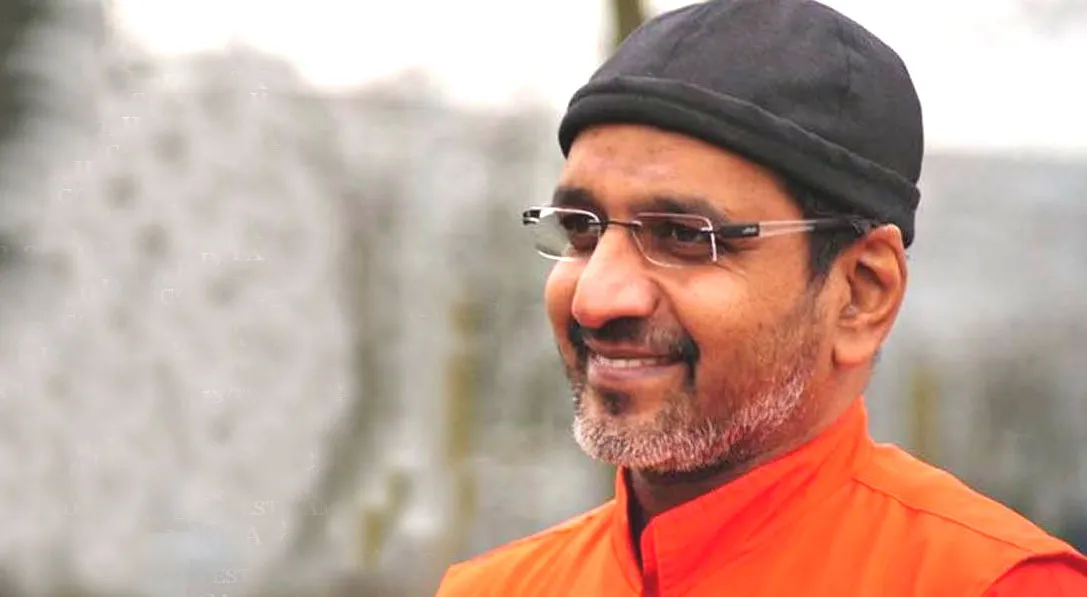
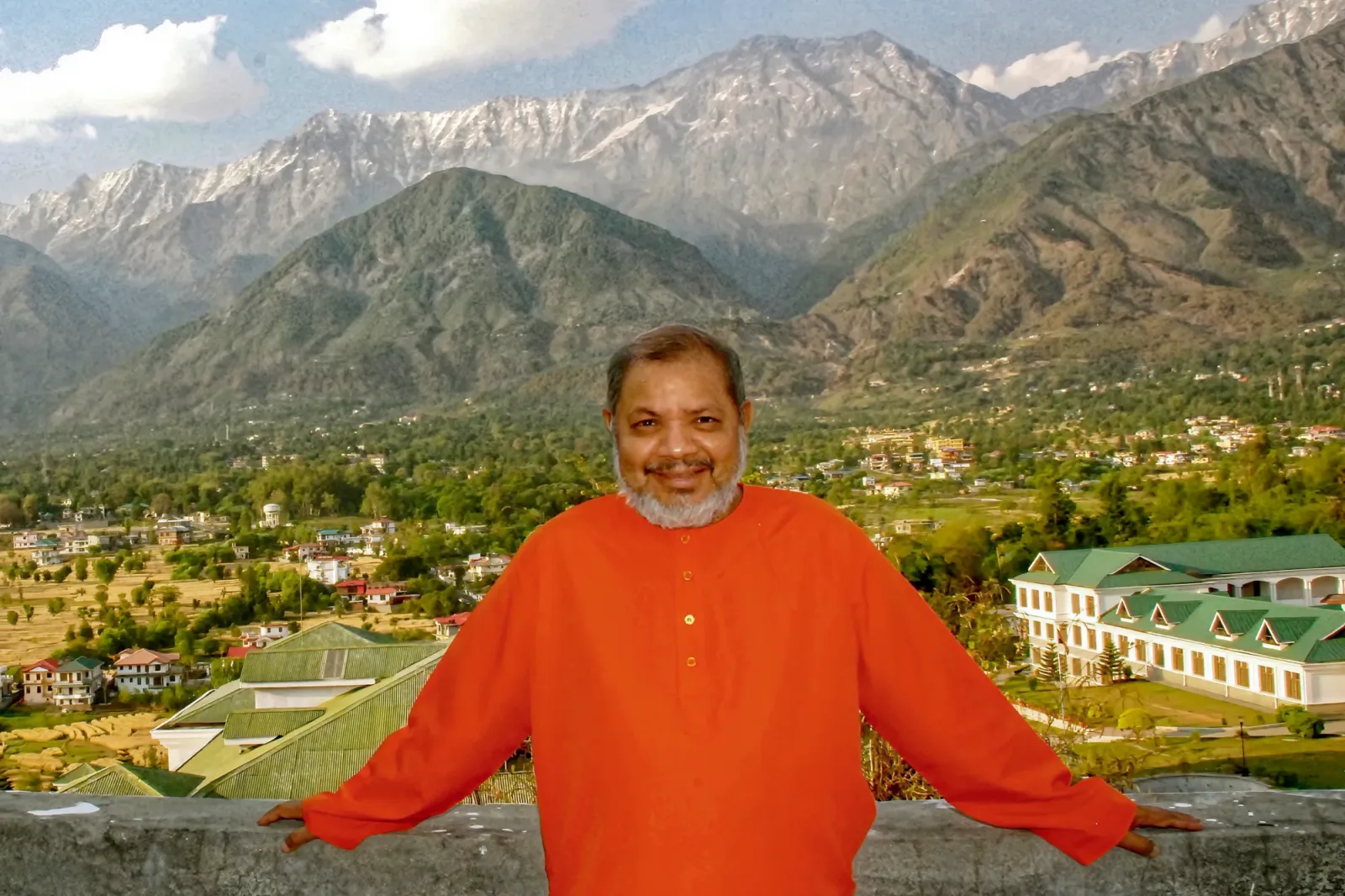
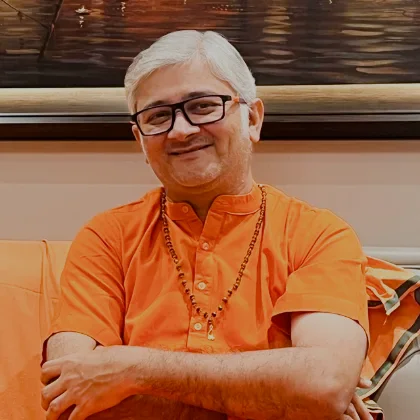
Swami Mitrananda in a dark cap and saffron, smiling
Swami Mitrananda.
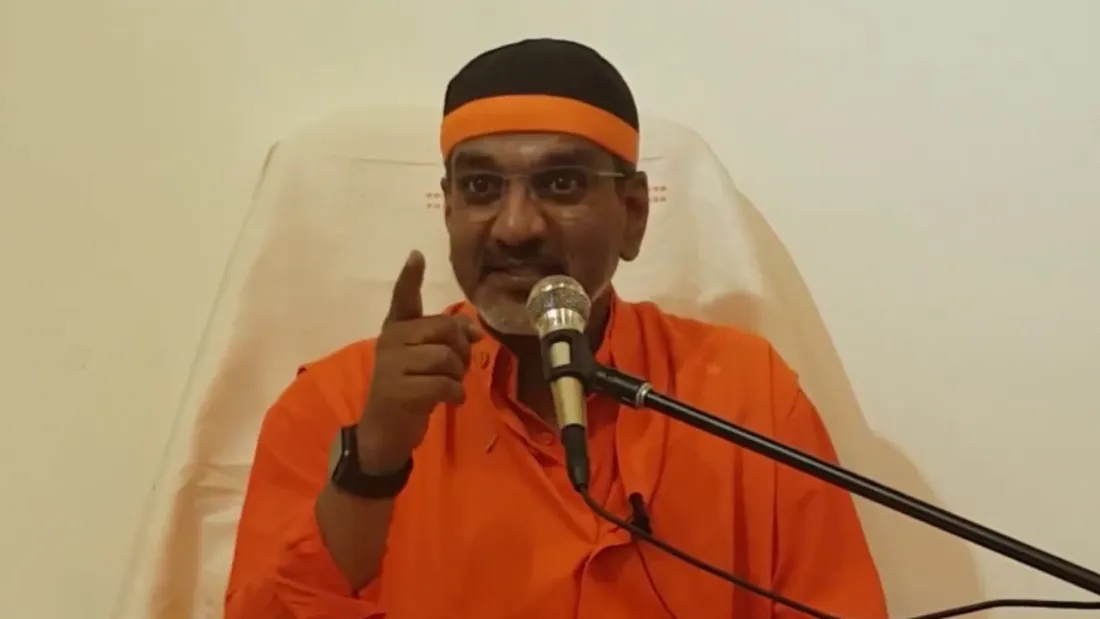
Swami Mitrananda speaking into a microphone, one finger raised
In satsang.
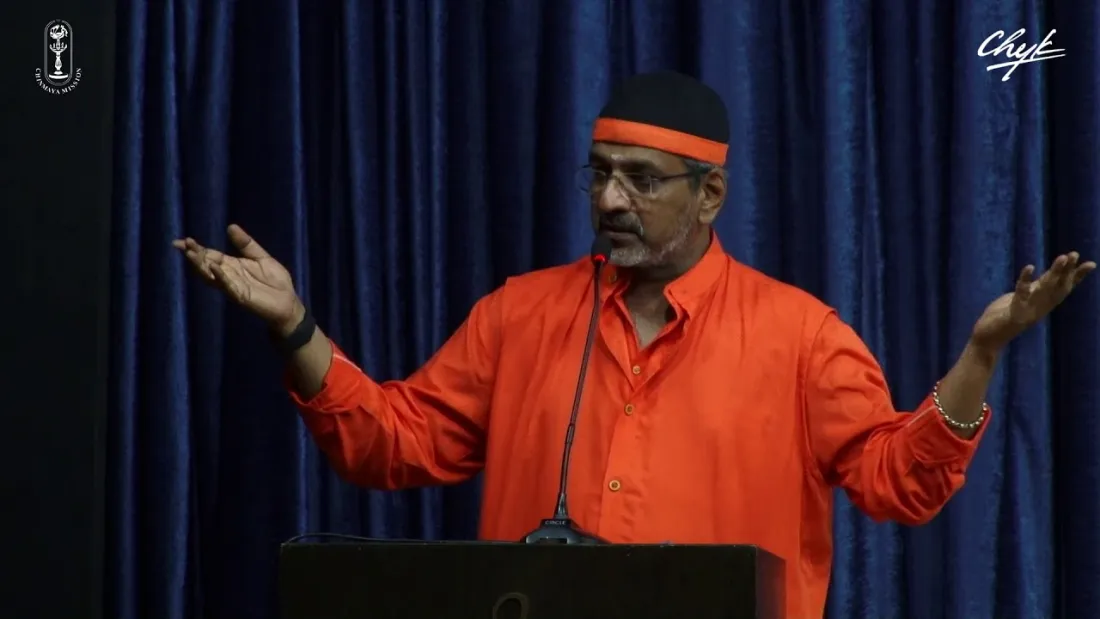
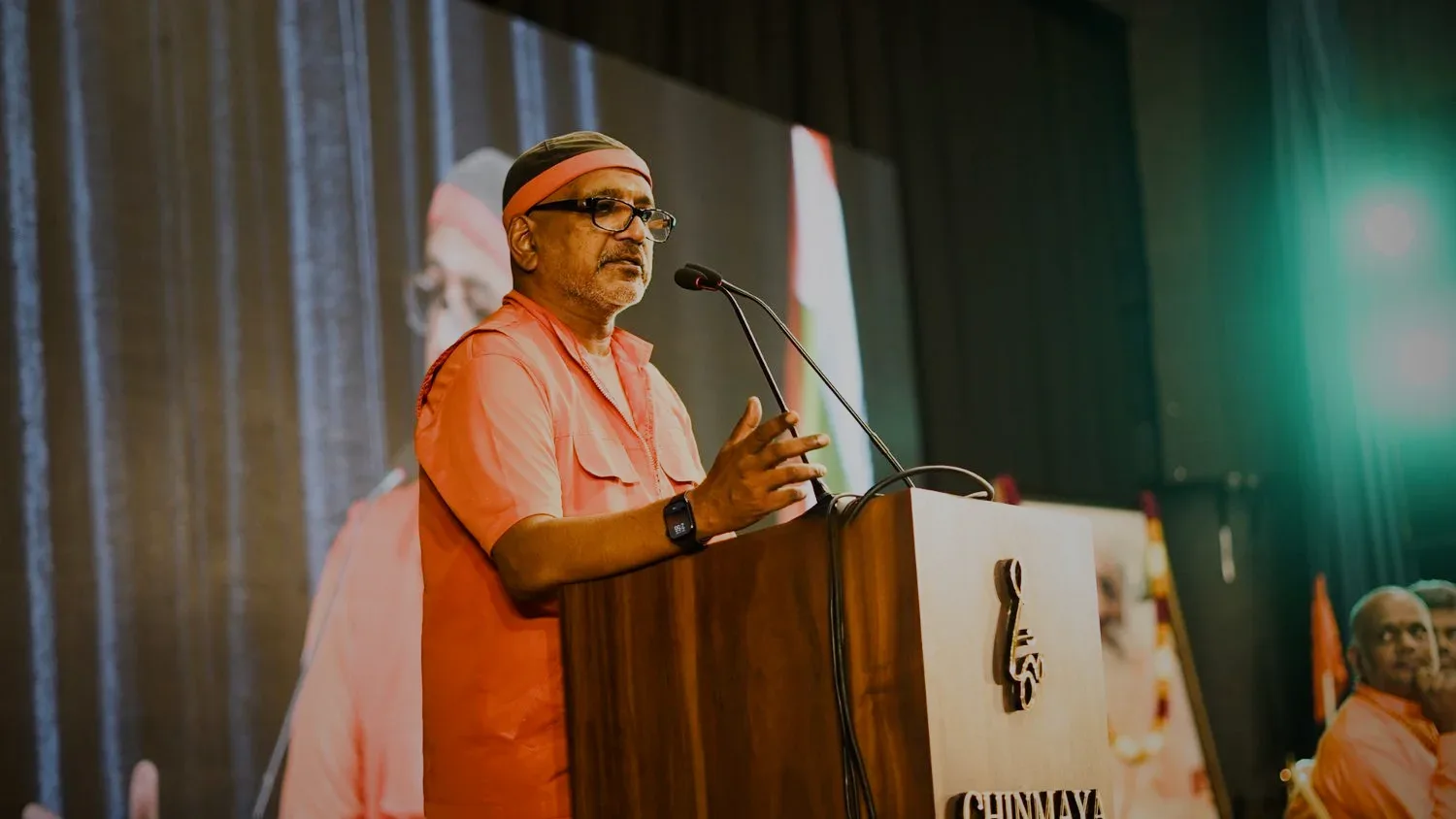
Swami Mitrananda speaking at a lectern before a blue curtain
At Be There, the CHYK National Youth Convention, 2025.

SWATMANANDAJI

Swami Swatmananda

Swami Swatmananda Saraswati has served Chinmaya Mission in Mumbai since the year 2000 and is one of the senior acharyas of the Mission. He counts himself a disciple of Pujya Gurudev. Those who come to his classes in Mumbai, or who follow his talks online, know him for a calm and balanced manner and for a clarity that makes the deepest texts feel approachable.

He is a graduate in commerce and was trained in software programming. He completed the eleventh residential Vedanta course at Sandeepany Sadhanalaya in Powai, from 1998 to 2000, and has served in Mumbai ever since. Under his care Chinmaya Mission Mumbai has grown into eight zones, with ten centres spread across Mumbai and Navi Mumbai.

What he teaches is Advaita Vedanta, through discourses on the Bhagavad Gita, the Upanishads and other texts of Vedanta and bhakti, and through camps, meditation retreats and long conversations with young people and adults alike. He has addressed corporate audiences and seekers across the country, and in Mumbai he has led weekly Gita discussion groups for business leaders. He has also walked the Narmada Parikrama, some 3,400 kilometres on foot around the sacred river.

He has a playwright's gift as well. In 2009 he wrote and directed Adrishya, a play on the Saraswati civilisation and the vision of a developed India, which CHYK Mumbai performed nine times in Mumbai, Pune, Allahabad and Chennai. In 2015 came Just Like That, which brings the Gita into the life of an ordinary family, and after it Dharmayoddha Vidyaranya, which has been staged in many parts of Bharat.

In Gurudev's birth centenary year he conceived Chinmaya Pradeep, an outdoor Vedantic vision park, the first of its kind in India, laid out over twenty thousand square feet near Gurudev's kutia at Sandeepany Sadhanalaya in Powai. It brings Hindu culture and Vedanta to life through immersive exhibits, and it was inaugurated on 12 June 2016 by Pujya Guruji and Swami Brahmananda. His book Be Shiva takes the reader through the hundred and eight names of Lord Shiva, with more than four hundred practical sadhanas along the way.

For CHYK he has mentored several batches of the Youth Empowerment Programme, and he speaks often to young audiences, in series such as Gita for Hustlers made with CHYK, and through his podcasts and his Chinmaya Shivam channels. People who know him speak first of his simplicity, his foresight and his peaceful nature, and of the balance he brings to everything he does.

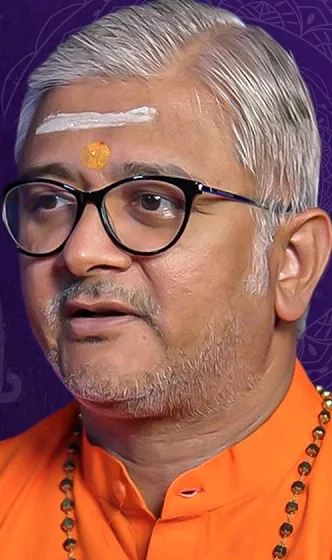
Swami Swatmananda in spectacles, speaking, a rudraksha mala over his saffron kurta
Swami Swatmananda.
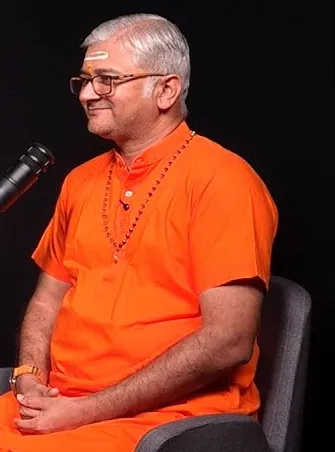
Swami Swatmananda seated at a microphone, smiling
In conversation for CHYK's Gita for Hustlers.

ANUKOOLANANDAJI

Swami Anukoolananda

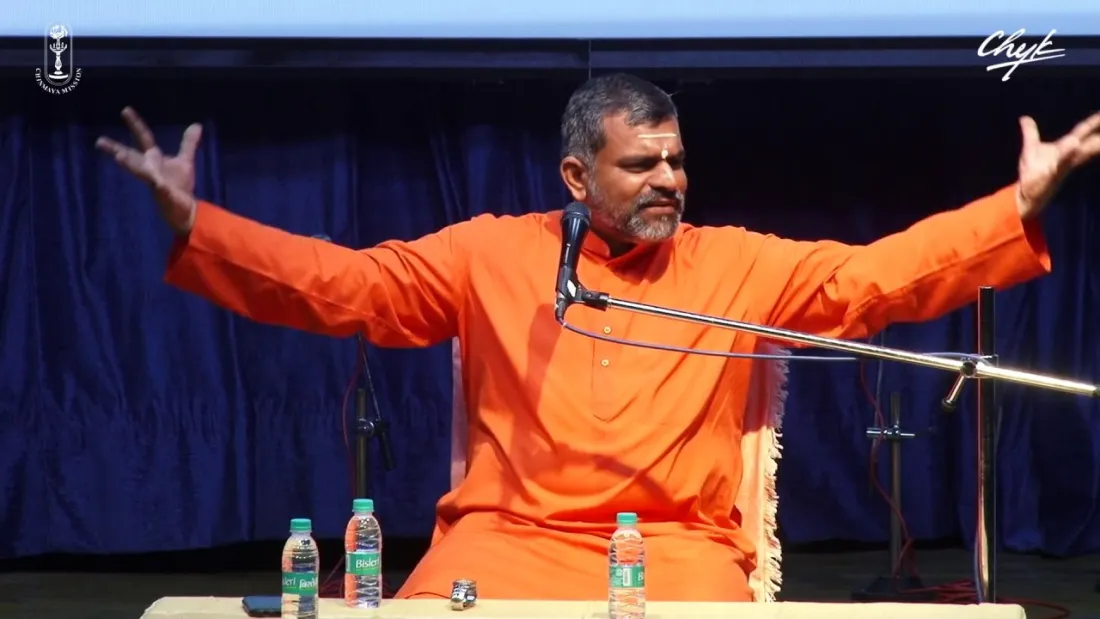
Swami Anukoolananda is the Resident Director of Chinmaya International Residential School in Coimbatore and the National Convener of the All India Chinmaya Yuva Kendra. For the young graduates of the Youth Empowerment Programme, who spend their first months of training at Chinmaya Gardens in Coimbatore, he is also their Resident Acharya through those months.

He was taught Vedanta within the Chinmaya Mission by learned teachers of the tradition. He was initiated into brahmacharya on 15 August 2000, and he received sannyasa on Mahashivaratri in 2013. He has served at Chinmaya International Residential School since 2005, and Education World has named it the best residential school in Tamil Nadu and the second best in all of India. He sits on the board of the Chinmaya Education Cell, which guides more than a hundred Chinmaya educational institutions, and on the Board of Management of Chinmaya Vishwa Vidyapeeth.

Youth work has long been close to his heart. He served as Director of the South Zone of the All India Chinmaya Yuva Kendra before he took up its national responsibility, and when the Global CHYK Camp met at Coimbatore in December 2022 he was one of its Upacharyas. At Be There, the CHYK National Youth Convention of 2025, his inaugural message to the young people gathered there was "Break the limits, not the rules."

His talks bring the Bhagavad Gita and the Upanishads to bear on personal and professional life, and he has spoken widely on the Indian ethos in management and on how Vedanta can shape the way an organisation is run. He has taught Adi Shankaracharya's Vivekachoodamani in depth, and in 2026, in the Mission's seventy-fifth year, he gave the keynote address on education at the Chinmaya international conference held at Chinmaya Vishwa Vidyapeeth.

In his message to the school he recalls Gurudev's words, "Win the mind; win the world." The hope he holds for the country is of a nation full of dynamic young people, steeped in the knowledge and practice of Indian culture, serving the nation and leading the world on a path to true freedom and lasting happiness. Each year a new batch of young people at Coimbatore sets out with that hope as its own.

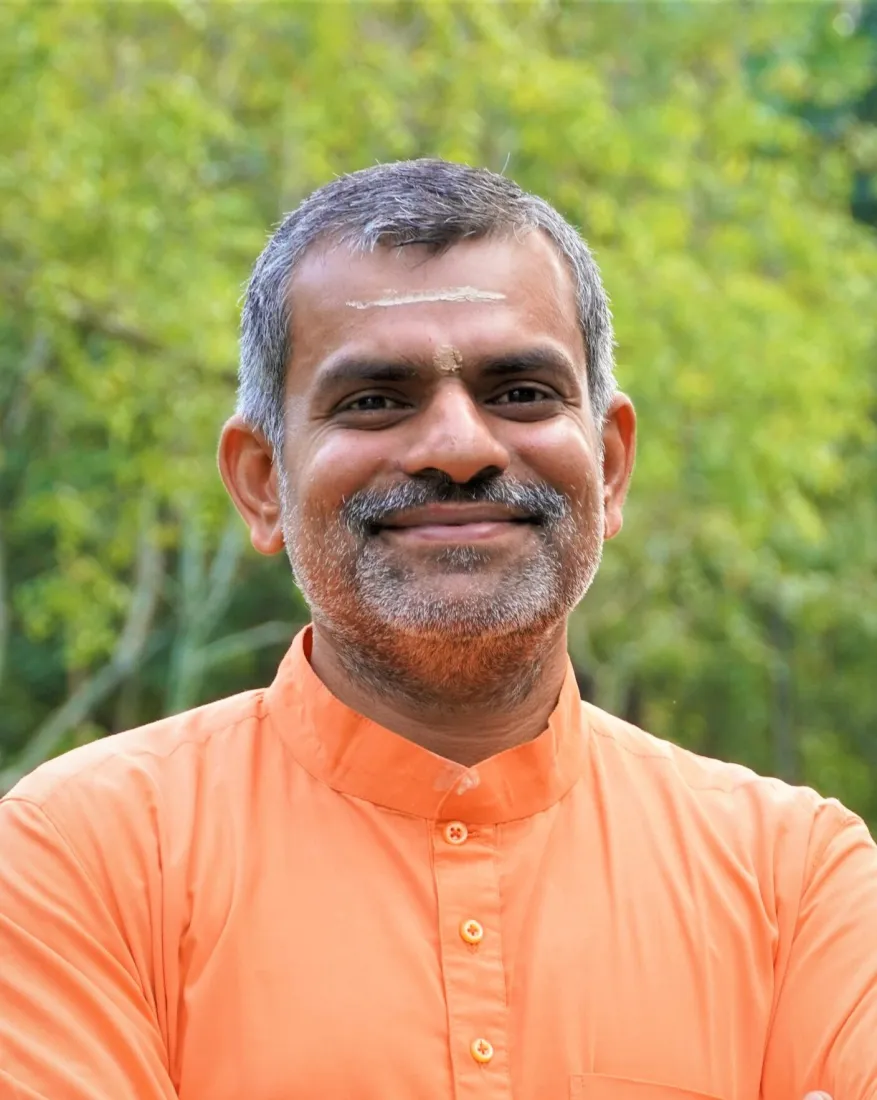
Swami Anukoolananda smiling, in saffron, against green foliage
Swami Anukoolananda.
Swami Anukoolananda seated on stage with his arms flung wide
At Be There, the CHYK National Youth Convention, 2025.

Seven lives, one teaching, and a place in it for you.

Join CHYK